
Heroes of Engineering

Gallery
If you've worked in the engineering industry for any number of years, you're bound to have come across some characters: respected and feared from Bongo in Nigeria to Ulsan in Korea, from Arctic Russia to the Arabian desert, and all points in between. The pipers and sparks and artificers, whose skill and fortitude in the face of primitive facilities, climate extremes and earthquakes were indispensable in the success of engineering projects across the globe.
This section is dedicated to a few individuals whose outstanding engineering achievements have done so much in the forging of the modern world. What do you think of the selection? Who else would you like to see included here?
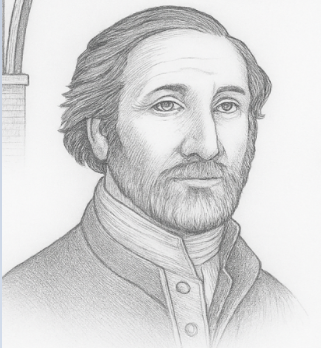
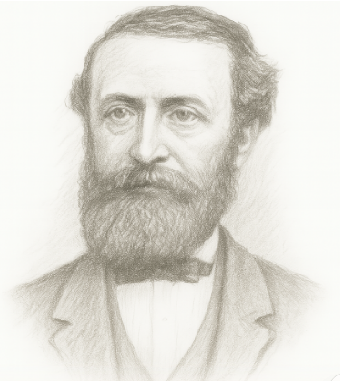
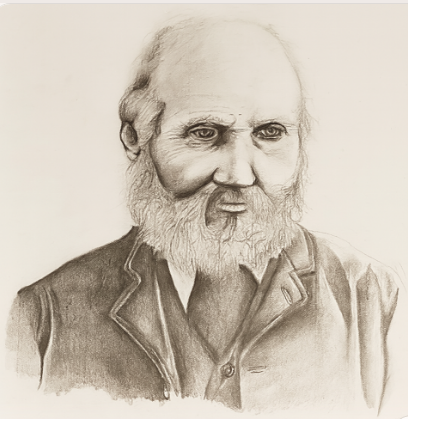
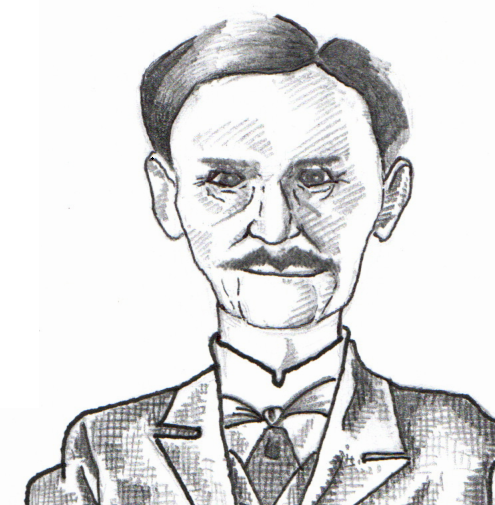
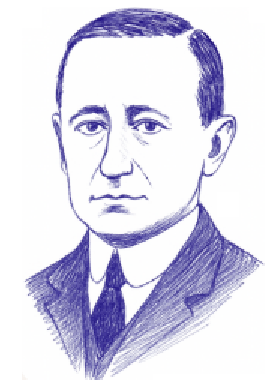
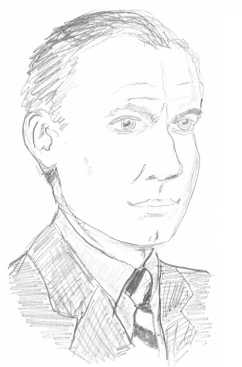
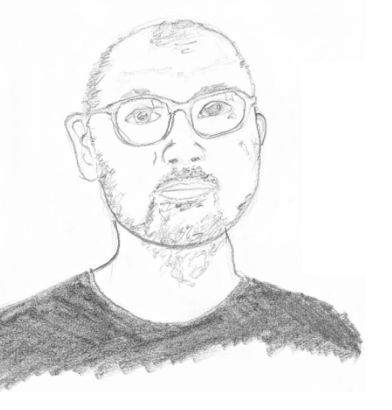
Some of the artwork was contributed by Alasdair Kearns, some by Jerry Kearns, and some . . . well who knows? Maybe I used AI to lend a hand. See if you can spot which is which.
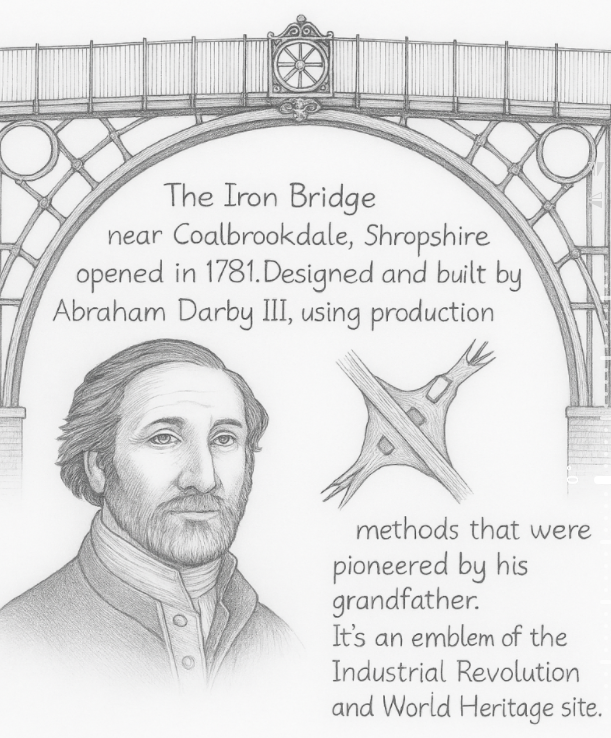
The beginings of the Industrial Revolution
Abraham Darby III (1750 - 1789)
Abraham Darby's grandfather had revolutionized iron production by using coke instead of charcoal. At just 13, Darby III inherited his father's shares in the family iron business and by 18, he was managing the Coalbrookdale ironworks. The Iron Bridge, the world’s first cast-iron bridge, was his most famous achievement. It demonstrated the structural potential of cast iron. The bridge used around 378 tonnes of iron and was composed of nearly 500 unique castings.
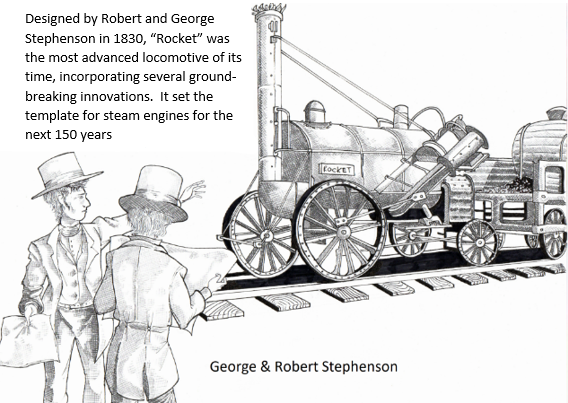
The Age of Steam
George Stephenson (1781–1848) and Robert Stephenson (1803–1859)
Another engineering dynasty take up the reins. George Stephenson worked in coal mines as a boy and taught himself to read and write at night school. His practical engineering and vision laid the foundation for a revolution in transportation. He has been called the "Father of Railways". He was also the father of Robert Stephenson, who succeeded him as the president of the Institution of Mechanical Engineers. He expanded on his father's legacy and became one of the greatest engineers of the 19th century, working on projects in Europe, Egypt, and India, and helped shape railway engineering worldwide.
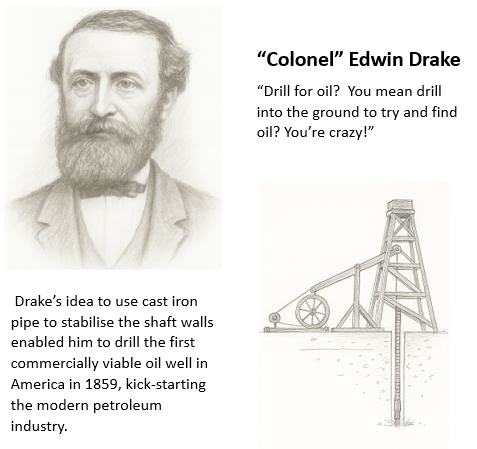
The birth of the Petroleum Industry
"Colonel" Edwin Drake (1819 - 1880)
In 1859, Drake drilled the first commercial oil well in Titusville, Pennsylvania, using a steam engine and pipe-driving technique.
Although he was commonly referred to as “Colonel” Drake, he never served in the military nor held an official rank. The title "Colonel" was likely given to him as a mark of respect.
Despite his (literally) ground-breaking achievement, he did not make a fortune from oil. Drake failed to patent his drilling method, which allowed others to freely copy and profit from his innovation.
A string of bad business decisions left him destitute. After falling on hard times, he was awarded a modest pension by the state of Pennsylvania.
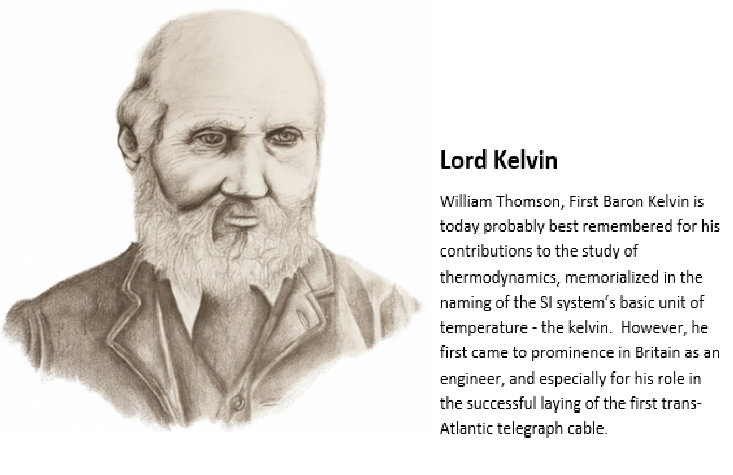
The scientist-engineer
Lord Kelvin (1824 - 1907)
Born in Belfast in 1824, William Thomson showed early academic promise and became a professor at the University of Glasgow at the age of just 22 years. However, he was more than just an academic. After previous attempts had failed, Thomson's practical contributions were pivotal in the success of the Transatlantic Telegraph one of the most ambitious and transformative engineering feats of the 19th century. His scientific insights helped improve cable design and signal transmission. He was ennobled by Queen Victoria in 1892 and became the first scientist to sit in the House of Lords.
The Age of Hot Water
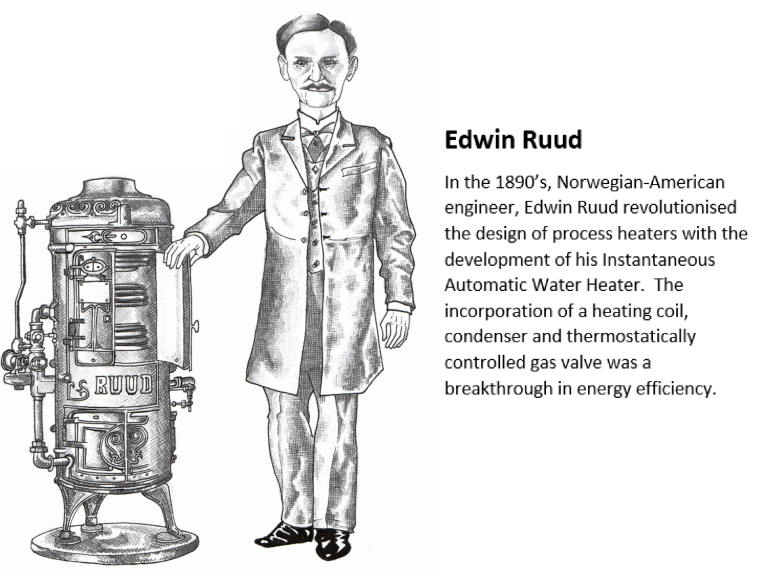
Edwin Ruud (1854 - 1932)
Edwin Ruud was born in Norway in 1854, in a region with a strong maritime and industrial heritage, where his aptitudes suited him for a career as a mechanical engineer. He emigrated to the USA in the 1880's. In 1897, Ruud left his job at the Fuel Gas and Manufacturing Company (where he worked under George Westinghouse) and founded the Ruud Manufacturing Company. There he patented his Type F, Thermal Valve Model tankless water heater, of which about 100,000 had been installed in USA and Canada by 1915. Hot water was never the same again.
(Wasn't "Edwin" a popular name for 19th century engineers?)
Who needs wires?
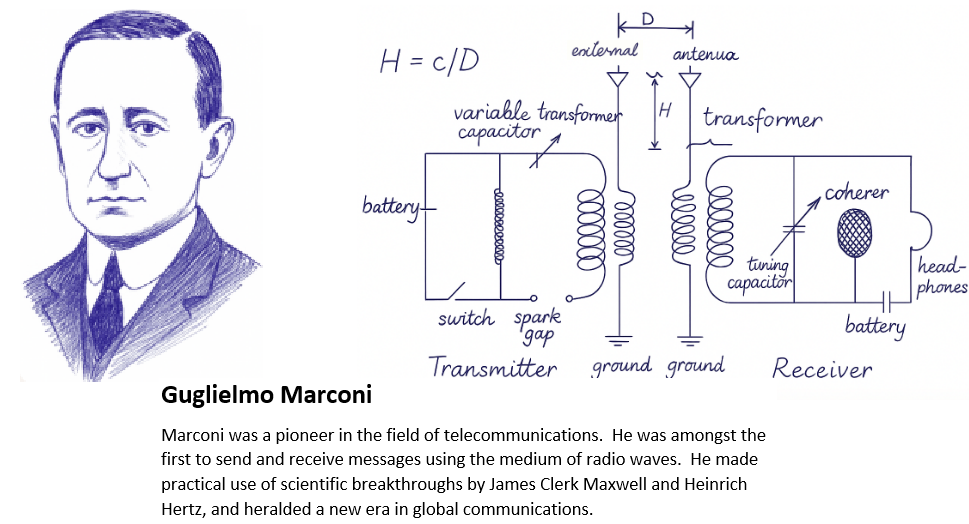
Guglielme Marconi (1874 - 1937)
Born in Bologna, Italy, in 1874, Guglielmo Marconi was an inventor and electrical engineer whose pioneering work in wireless communication earned him global recognition as the "father of radio".
Marconi’s innovations revolutionized global communication, laying the groundwork for radio, television, and modern wireless technologies. In 1909, he was awarded the Nobel Prize in Physics, shared with Karl Ferdinand Braun, for their contributions to wireless telegraphy. He was one of the passengers on the ill-fated maiden voyage of the Titanic. But he must have survived, because he died in 1937.
Let's raise a glass to . . .
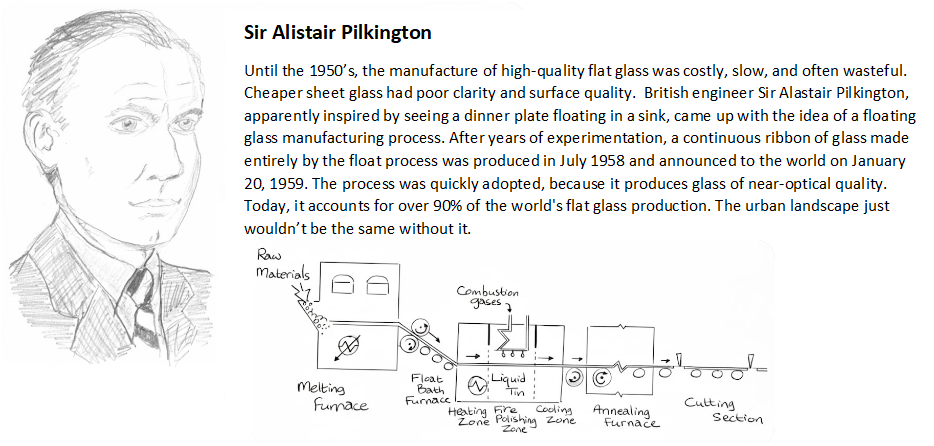
Sir Alistair Pilkington (1920 - 1995)
Alistair Pilkington was born in 1920 in Calcutta, India, but was educated in England. He commenced his degree in mechanical science at Cambridge University just in time for it to be interrupted by the Second World War. He served in the Royal Artillery, but was captured in Crete and spent 4 years as a PoW. At the end of the war, after completing his degree, he joined the manufacturing company "Pilkington Brothers", where he went on to become a director, then chairman and then President for life. What's in a name? Well, he wasn't related to the family that owned the company, but surely it was meant to be.
Teamwork makes the dream work
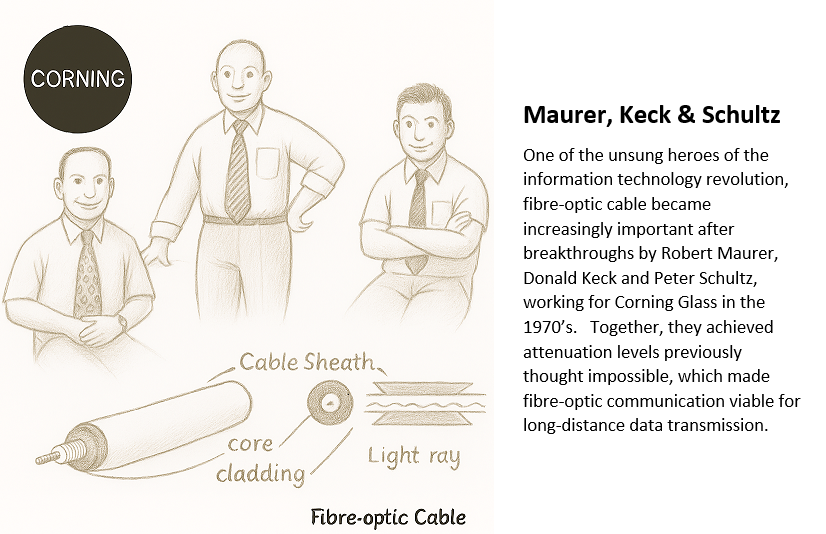
Robert Maurer (1924 - 2025)
Donald Keck (born 1941)
Peter Schultz (born 1942)
Working at Corning Glass Works in the late 1960s, Maurer, Keck and Schultz tackled the challenge of light attenuation in glass fibers. In 1970, they introduced a new process involving titania-doped silica, enabling the transmission of data with unprecedented clarity and speed. Their invention laid the foundation for the modern internet, long-distance communication. They were awarded the National Medal of Technology, cementing their legacy as transformative figures in engineering and applied physics. And may have stumbled across the secret of a long life.
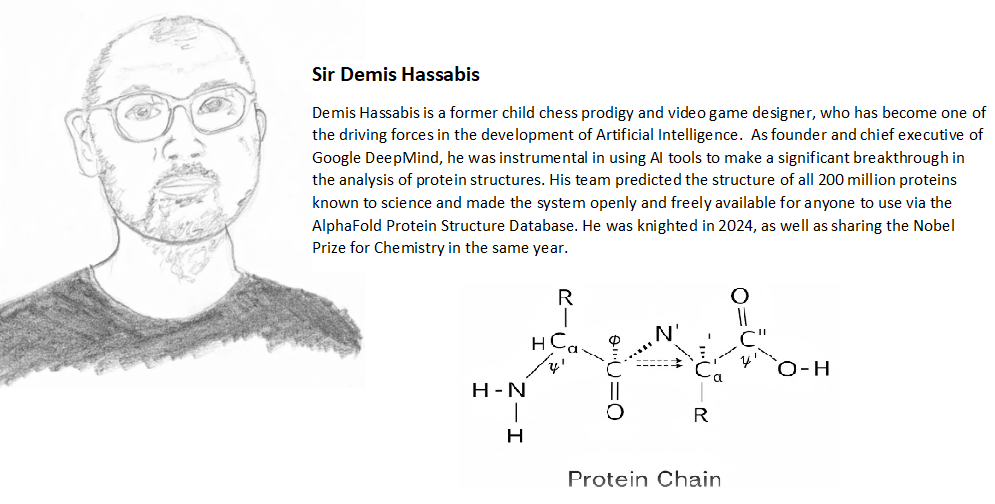
The future of intelligence. For real?
Sir Demis Hassabis (born 1976)
He's ten years younger than me, for goodness sake!
Find out more . . .
To find out more, you can follow the link here to return to the home page and continue from there. Or pick on one of the other links to go direct to another page.