Artificial Intelligence and Piping Engineering
AI has the potential to be transformative in the engineering industry. Already the impact can be seen in manufacturing, predictive maintenance, supply chain optimization. In the production of deliverables, the capabilities of AI are already significantly streamlining the process. However, adoption is uneven, and deeper integration is expected within five years, especially through generative design and predictive analytics.
AI is already making waves in several key areas of piping engineering, particularly around materials:
- Material Selection & Alloy Optimization: Generative AI can recommend optimal materials based on operating conditions like pressure, temperature, and corrosion resistance.
- Defect Detection & Quality Control: In manufacturing, AI-powered image analysis helps identify surface defects (e.g., cracks, corrosion) in steel pipes, improving reliability and reducing manual inspection time, minimizing outages and extending asset life.
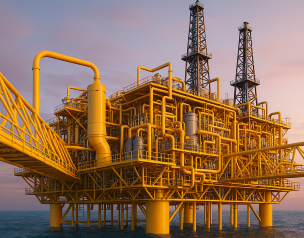
- Generative Design: AI tools can generate optimized piping layouts and material choices, reducing waste and speeding up design cycles. It can quickly and reliably translate 2-D design into 3-D models. (The picture, above is an AI generated image of such a model)
- Supply Chain Optimization: AI predicts demand for pipe types and manages inventory, improving delivery timelines and reducing costs.
Despite these advances, AI adoption remains fragmented.
Large firms with digital infrastructure are leading the charge, where smaller players often lack the data maturity or budget to implement AI tools effectively. While older staff lack exposure to technical innovations and are hidebound by processes which, once cutting edge, are now increasingly out-dated. On the other hand, younger staff lack the practical experience to critically interrogate the output of generative design.
This is of real concern at the moment, where leading exponents of AI (such as Demis Hassabis, included in the "Heroes of Engineering" section, quoted here from an article in the Times of India (online)) freely admit that current AI has "uneven" or "jagged" intelligences - excelling brilliantly in some dimensions, while being easily exposed in others.
There is a bridge between innovation and experience, that Kearns Technical Solutions is well placed to cross - extensive project work over many years, combined with continuing exposure to new technologies at post-graduate academic levels.
Current status
Looking ahead
By 2030, expect AI to be deeply embedded across the piping lifecycle:
- Digital Twins: Real-time simulation and monitoring of piping systems will become standard, enabling predictive failure analysis and proactive maintenance.
- Sustainable Materials: AI will help develop and select eco-friendly, corrosion-resistant materials tailored to specific environments, aligning with stricter environmental regulations.
- Robotics Integration: AI will increasingly control robotic welders and inspection drones, improving safety and precision in hazardous environments.
- 3D Printing & Customization: AI will guide additive manufacturing of complex pipe components, optimizing geometry and material use for specific applications.
- Multidisciplinary Roles: Engineers will need hybrid skills—combining traditional piping knowledge with AI, robotics, and data analytics—to stay competitive.
Although these are listed here as predicted developments, end users are already looking ahead to implement these and similar advances, and engineering service companies need to be planning to incorporate this type of new engineering now.
State of the Art
To talk of "pros and cons" or "strengths and weaknesses" as if there is a discussion to be had as to whether or not to adopt AI is disingenuous. Whatever part of the engineering universe you inhabit, if it's not already there, then Artificial Intelligence is coming, and coming soon. In its current iteration, though, there are capabilities and limitations.
Capabilities:
- Boosts efficiency and accuracy in design and manufacturing.
- Enhances safety through predictive maintenance and robotic inspection.
- Enables smarter material choices and sustainability.
Limitations:
- Requires high-quality data and digital infrastructure.
- Can be opaque — AI decisions (e.g., material selection) may lack explainability.
- Risk of over-reliance: human oversight remains critical, especially in safety-critical systems.
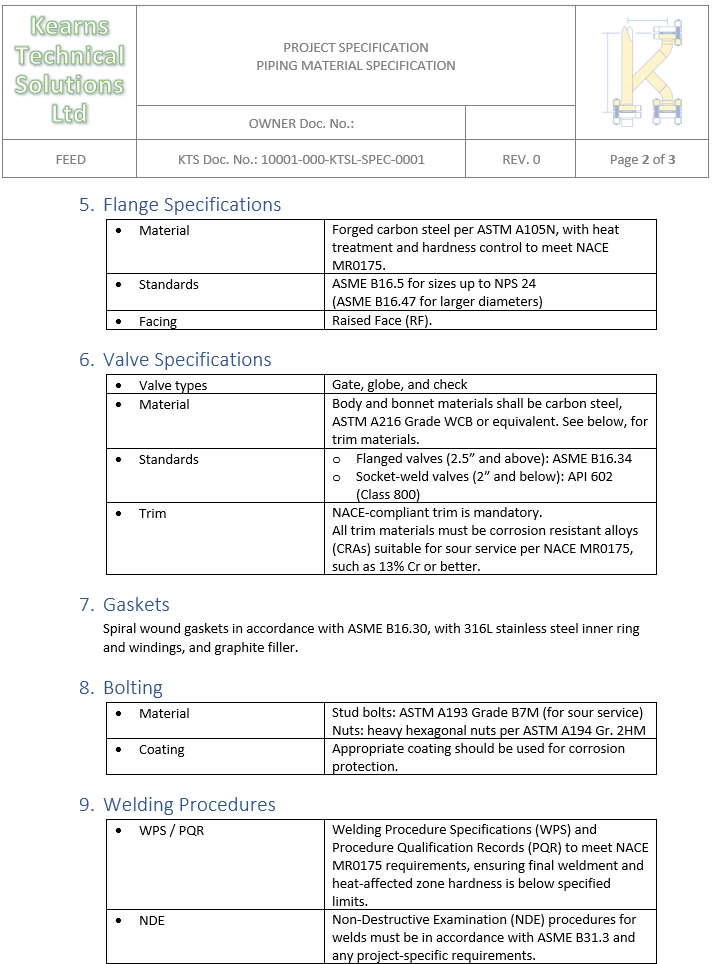
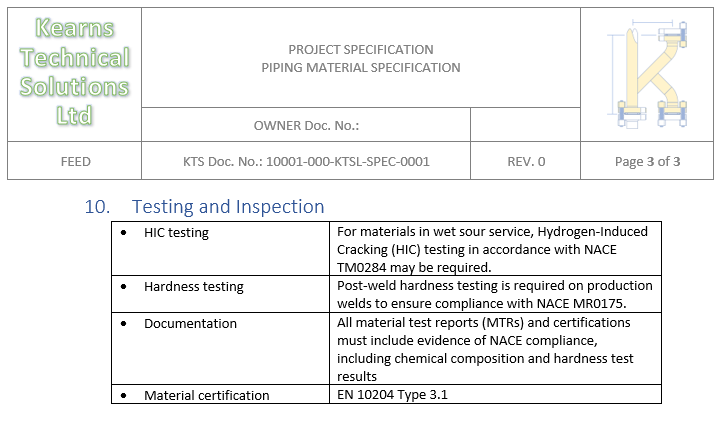
AI generated Piping Material Specification
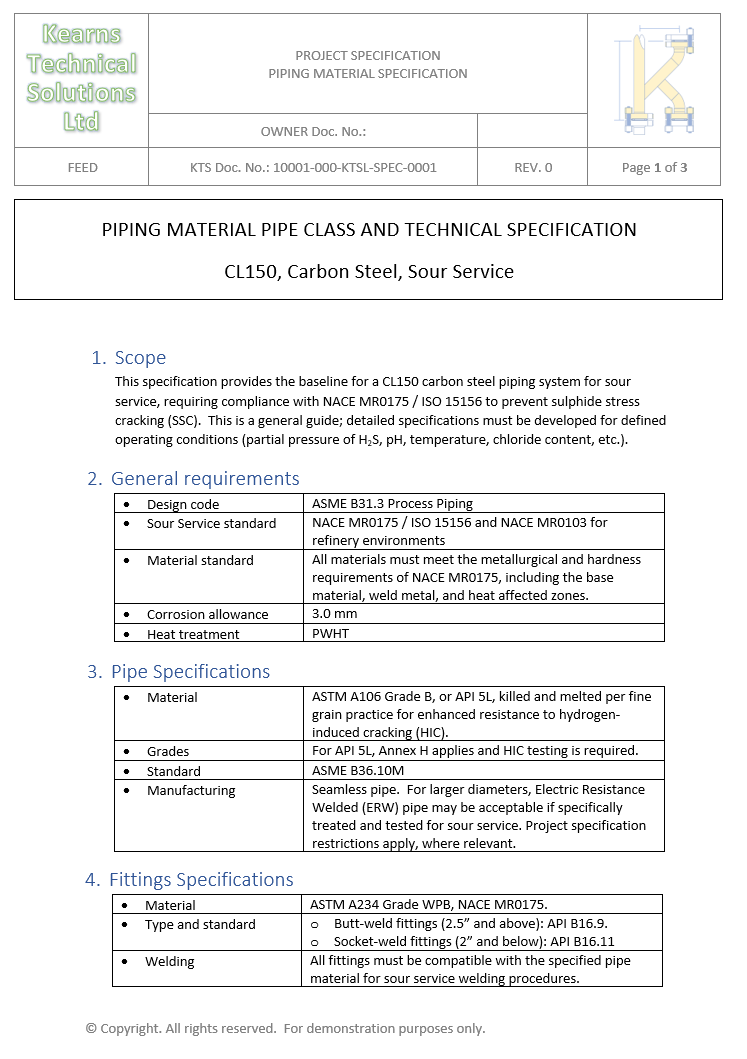
This section includes a piping material specification KTS developed using AI resources, for demonstration purposes only.